Studios, stages and signal paths
A look at the kinds of rooms, rigs and set-ups we plan and document, shown through the materials and steps that go into each part of the work.
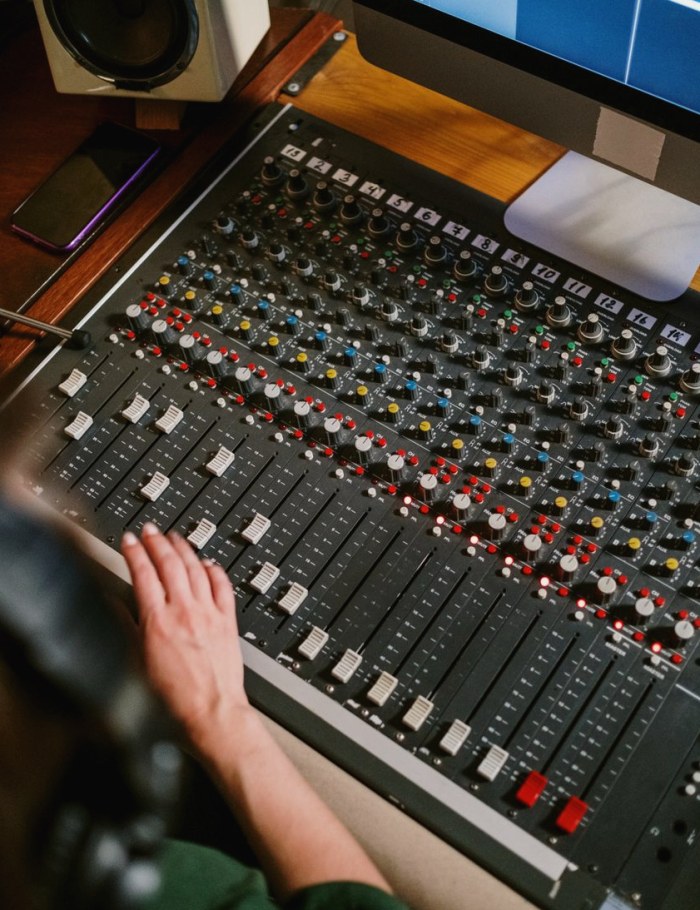
The details behind each kind of production work
Production work is made of small physical decisions: where a cable runs, how a light is hung, how a mixing position is placed. These scenes show the settings and steps involved in the services we offer.
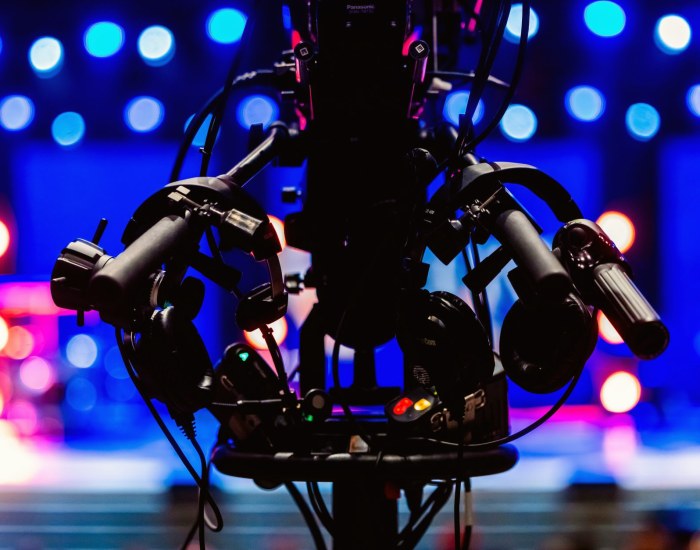
Studio floor with cameras and lighting grid
Studio planning starts with the floor. Camera positions, the lighting grid and the route for each cable are marked out together so operators can move freely and nothing crosses a sightline.
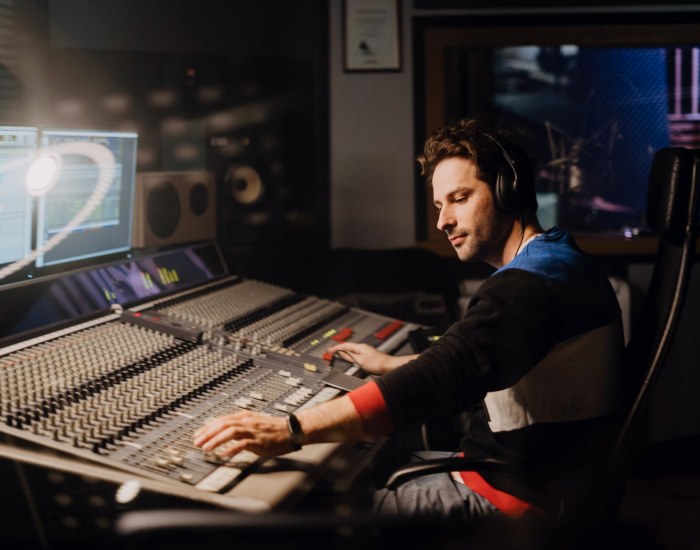
Control room with vision mixing desk
In the control room the vision mixer, monitors and communications sit within easy reach of each operator. We plan the desk layout around who talks to whom during a live programme.
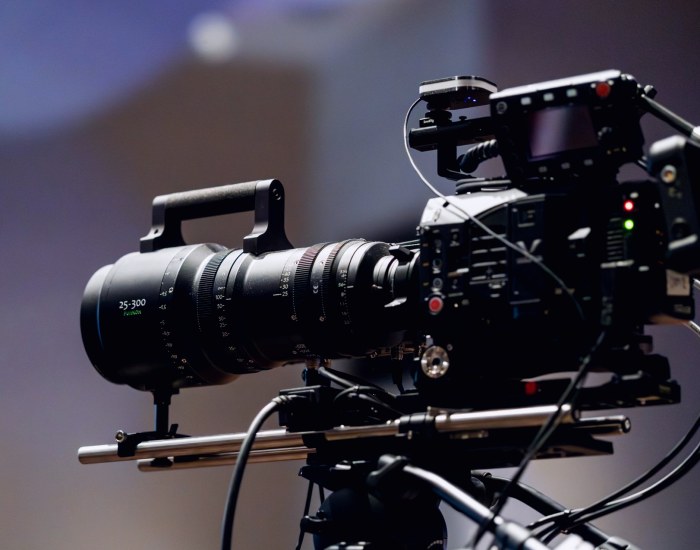
Camera on a remote head
Remote heads let one operator control camera movement from a distance. Specifying them means matching the head, the control unit and the cabling to the shots the programme needs.
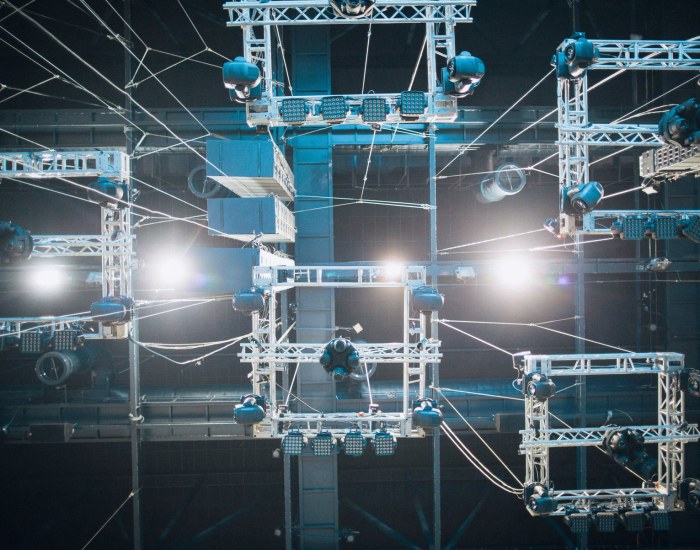
Lighting truss above a stage
A lighting plan becomes a rigging document: truss positions, fixture lists and weights are written down so the crew can hang the rig safely and in the right order.
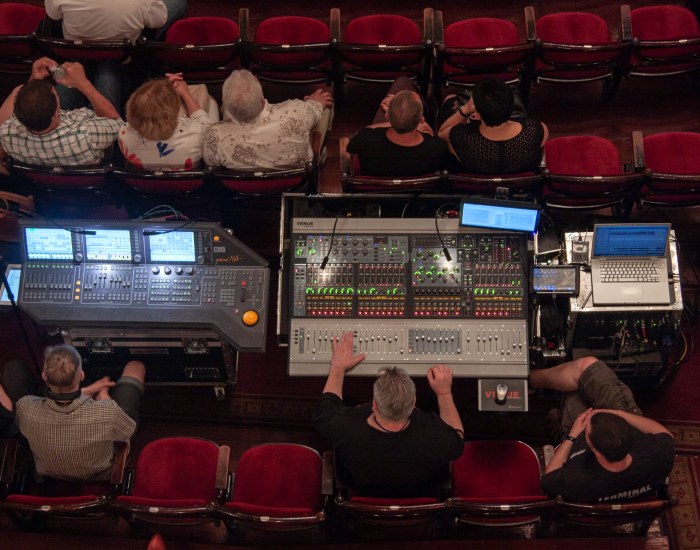
Front of house mixing position
The front of house position is chosen for how the room sounds, not only for convenience. System tuning happens before the audience arrives, with feeds for broadcast checked separately.
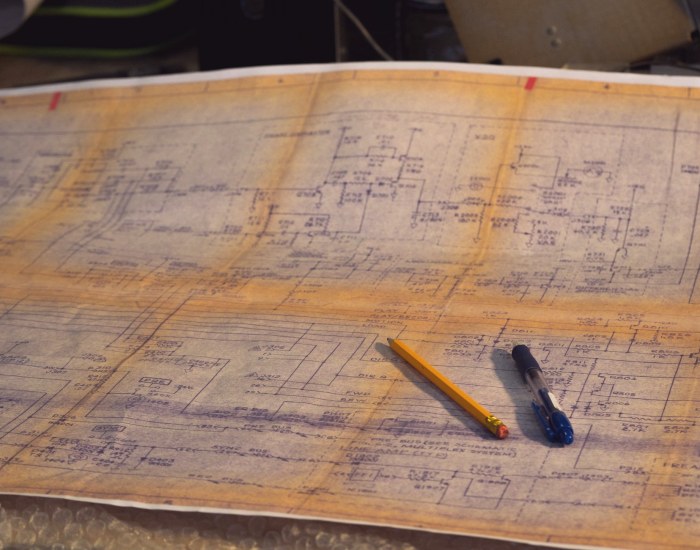
Signal flow diagram and schedule
A signal flow diagram shows every source, route and destination on one page. Alongside the running schedule, it gives crews and networks a shared reference during setup and on the day.
Teams we work with across the UK
- Television networks
- Event producers
- Venue managers
- Production crews
- Broadcast partners
- Festival organisers
Use the contact page to describe the studio, stage or event. We will say which of our services fit and send a written quotation once the scope is clear.